Image

LOUPE, formerly Labelexpo, showcases technologies shaping t…

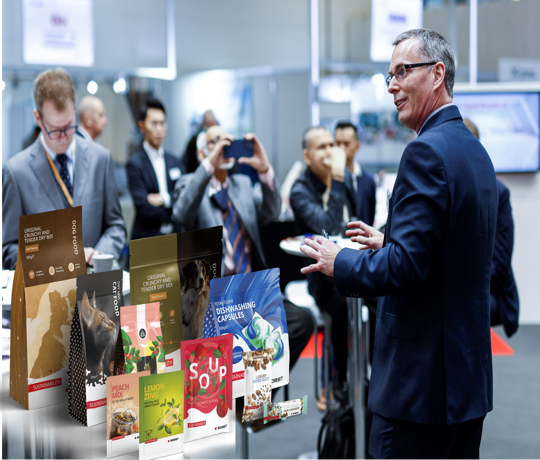
By Andy Thomas-Emans, Strategic Director at LOUPE Global, Informa Markets The last two Labelexpo shows - Labelexpo Europe and Labelexpo Asia 2025 - demonstrated how core label converting technologies have been adapted to open up new opportunities in the flexible packaging and folding carton markets. We can expect LOUPE to build further on these foundations.  Flexible packaging has led the way. We have seen at Labelexpo in the last 12 years the building of a network of suppliers covering all aspects of flexible packaging relevant to label converters. At the last two Labelexpo Europe exhibitions, 40 percent of visitors registered an interest in flexible packaging as well as labels. HP Indigo still leads the way on the digital printing of flexible packaging, most recently with its 200k press. Now we are starting to see the evolution of water-based inkjet, with Screen bringing its TruePress PAC 520P to the show for paper-based flexible packaging and Pulisi launching a water-based inkjet flexible packaging press at Labelexpo Asia. Miyakoshi demonstrated a prototype machine in Barcelona, where FujiFilm was promoting its FP790 technology. At the same time, we have seen the development of wider, mid-web flexo presses (670-850mm/26-30in) optimized for the printing of flexible packaging, often configured with extended IR/hot air flexo or gravure units for water-based coatings and inline lamination. We have also seen a growing number of suppliers demonstrating offline laminators tailored to the mid-web format, including ABG company Enprom, while JetFX demonstrated how tactile digital embellishment can be added with an inkjet bar at the laminating stage in a joint project with Karlville. Pouch manufacturing has also emerged as an area of growing interest, with Galaxy, Karville and Zhoutai all demonstrating machines at Labelexpo shows. Materials knowledge is a critical part of the learning journey when diversifying from labels, because the pouch, sachet or flow-wrap is now the primary product container.  Synthogra pioneered the supply of flexible packaging materials to label converters, and its mission has been to impart in-depth knowledge about the properties of laminated structures. Other materials suppliers have followed. Similarly, ink suppliers have tailored their exhibition space to focus on flexible packaging as well as label applications. LOUPE events, formerly Labelexpo, also host exhibitors who specialize in barrier coating technology, which is helping to make film and paper-based flexible packaging more sustainable by eliminating incompatible lamination layers. These are companies like Actega, Archroma, Tullis Russell and Sun Chemical. Why has flexible packaging proved such a perfect match for label converters, once the very steep learning curve has been mastered? Because buyers of flexible packaging usually deal with wide-web converters with long lead times, high minimum orders and long delivery times. Adapting core narrow and mid-web label technology – digital, flexo and hybrid – to this market harnesses the skills and agility of the label printer to deliver short lead times, rapid response, value-added inline decoration, personalization and mass customization. Folding cartons next Folding cartons will be the next package printing market to be positively disrupted by core labels technology, and for broadly similar reasons. At the last two Labelexpo Europe shows, 25 percent of visitors registered an interest in folding cartons. Industrial-scale folding carton production is overwhelmingly carried out in a multi-stage operation where offset printed sheets are moved between multiple offline processing stations. This involves long lead times, considerable work in progress and increased cost and work time for each subsequent decoration processes. Inline technology allows the production of finished folding cartons in a single pass. At Labelexpo Europe in Barcelona, Canon-Edale demonstrated a CartonLine press configured with inline technologies well understood by label converters – turnbar, cold foil, UV flexo print and coating stations, cast+cure holographic film application, followed by an inline flatbed die cut/crease module, waste ejection and delivery of finished pieces on a shingling conveyor. In principle an inline narrow/mid-web press, flexo or offset, could include any module common to a label press, including screen or inkjet bar for variable imaging or digital embellishment. For longer runs, rotary cutting and creasing dies can be used for single-pass production, a configuration shown by Hontec at Labelexpo Asia. ‘Near line’ digital printing with off-line finishing is another possible labels-derived workflow. We can expect our existing finishing and embellishment suppliers to develop innovative solutions here, just as they have for narrow web flexible packaging. Hybrid inline folding carton production systems are another option for future development, again developed on the basis of existing label technology. A system such as the Bobst DM-55 is a good example. Inline or near-line production changes the landscape for buyers of folding cartons, presenting them with new options in terms of lead times, speed of delivery and cost-effective and innovative single-pass decoration. There are many possibilities for adapting label technologies to folding carton production. One might be incorporating RFID labels into folding cartons in an automated single pass operation or adding inline multi-sheet booklet labels. At the first LOUPE show, LOUPE Americas 2026 in Rosemont we can expect to see suppliers of equipment, materials, consumables and software building on the foundations created by Labelexpo to deliver new and compelling solutions across labels, flexible packaging and folding cartons.
1 of 3 >>
Image

LOUPE, formerly Labelexpo, showcases technologies shaping t…

By Andy Thomas-Emans, Strategic Director at LOUPE Global, Informa Markets The last two Labelexpo shows - Labelexpo Europe and Labelexpo Asia 2025 - demonstrated how core label converting technologies have been adapted to open up new opportunities in the flexible packaging and folding carton markets. We can expect LOUPE to build further on these foundations.  Flexible packaging has led the way. We have seen at Labelexpo in the last 12 years the building of a network of suppliers covering all aspects of flexible packaging relevant to label converters. At the last two Labelexpo Europe exhibitions, 40 percent of visitors registered an interest in flexible packaging as well as labels. HP Indigo still leads the way on the digital printing of flexible packaging, most recently with its 200k press. Now we are starting to see the evolution of water-based inkjet, with Screen bringing its TruePress PAC 520P to the show for paper-based flexible packaging and Pulisi launching a water-based inkjet flexible packaging press at Labelexpo Asia. Miyakoshi demonstrated a prototype machine in Barcelona, where FujiFilm was promoting its FP790 technology. At the same time, we have seen the development of wider, mid-web flexo presses (670-850mm/26-30in) optimized for the printing of flexible packaging, often configured with extended IR/hot air flexo or gravure units for water-based coatings and inline lamination. We have also seen a growing number of suppliers demonstrating offline laminators tailored to the mid-web format, including ABG company Enprom, while JetFX demonstrated how tactile digital embellishment can be added with an inkjet bar at the laminating stage in a joint project with Karlville. Pouch manufacturing has also emerged as an area of growing interest, with Galaxy, Karville and Zhoutai all demonstrating machines at Labelexpo shows. Materials knowledge is a critical part of the learning journey when diversifying from labels, because the pouch, sachet or flow-wrap is now the primary product container.  Synthogra pioneered the supply of flexible packaging materials to label converters, and its mission has been to impart in-depth knowledge about the properties of laminated structures. Other materials suppliers have followed. Similarly, ink suppliers have tailored their exhibition space to focus on flexible packaging as well as label applications. LOUPE events, formerly Labelexpo, also host exhibitors who specialize in barrier coating technology, which is helping to make film and paper-based flexible packaging more sustainable by eliminating incompatible lamination layers. These are companies like Actega, Archroma, Tullis Russell and Sun Chemical. Why has flexible packaging proved such a perfect match for label converters, once the very steep learning curve has been mastered? Because buyers of flexible packaging usually deal with wide-web converters with long lead times, high minimum orders and long delivery times. Adapting core narrow and mid-web label technology – digital, flexo and hybrid – to this market harnesses the skills and agility of the label printer to deliver short lead times, rapid response, value-added inline decoration, personalization and mass customization. Folding cartons next Folding cartons will be the next package printing market to be positively disrupted by core labels technology, and for broadly similar reasons. At the last two Labelexpo Europe shows, 25 percent of visitors registered an interest in folding cartons. Industrial-scale folding carton production is overwhelmingly carried out in a multi-stage operation where offset printed sheets are moved between multiple offline processing stations. This involves long lead times, considerable work in progress and increased cost and work time for each subsequent decoration processes. Inline technology allows the production of finished folding cartons in a single pass. At Labelexpo Europe in Barcelona, Canon-Edale demonstrated a CartonLine press configured with inline technologies well understood by label converters – turnbar, cold foil, UV flexo print and coating stations, cast+cure holographic film application, followed by an inline flatbed die cut/crease module, waste ejection and delivery of finished pieces on a shingling conveyor. In principle an inline narrow/mid-web press, flexo or offset, could include any module common to a label press, including screen or inkjet bar for variable imaging or digital embellishment. For longer runs, rotary cutting and creasing dies can be used for single-pass production, a configuration shown by Hontec at Labelexpo Asia. ‘Near line’ digital printing with off-line finishing is another possible labels-derived workflow. We can expect our existing finishing and embellishment suppliers to develop innovative solutions here, just as they have for narrow web flexible packaging. Hybrid inline folding carton production systems are another option for future development, again developed on the basis of existing label technology. A system such as the Bobst DM-55 is a good example. Inline or near-line production changes the landscape for buyers of folding cartons, presenting them with new options in terms of lead times, speed of delivery and cost-effective and innovative single-pass decoration. There are many possibilities for adapting label technologies to folding carton production. One might be incorporating RFID labels into folding cartons in an automated single pass operation or adding inline multi-sheet booklet labels. At the first LOUPE show, LOUPE Americas 2026 in Rosemont we can expect to see suppliers of equipment, materials, consumables and software building on the foundations created by Labelexpo to deliver new and compelling solutions across labels, flexible packaging and folding cartons.
1 of 3 >>
sidebar image
Editor

LOUPE, formerly Labelexpo, showcases technologies shaping the future …

By Andy Thomas-Emans, Strategic Director at LOUPE Global, Informa Markets The last two Labelexpo shows - Labelexpo Europe and Labelexpo Asia 2025 - demonstrated how core label converting technologies have been adapted to open up new opportunities in the flexible packaging and folding carton markets. We can expect LOUPE to build further on these foundations.  Flexible packaging has led the way. We have seen at Labelexpo in the last 12 years the building of a network of suppliers covering all aspects of flexible packaging relevant to label converters. At the last two Labelexpo Europe exhibitions, 40 percent of visitors registered an interest in flexible packaging as well as labels. HP Indigo still leads the way on the digital printing of flexible packaging, most recently with its 200k press. Now we are starting to see the evolution of water-based inkjet, with Screen bringing its TruePress PAC 520P to the show for paper-based flexible packaging and Pulisi launching a water-based inkjet flexible packaging press at Labelexpo Asia. Miyakoshi demonstrated a prototype machine in Barcelona, where FujiFilm was promoting its FP790 technology. At the same time, we have seen the development of wider, mid-web flexo presses (670-850mm/26-30in) optimized for the printing of flexible packaging, often configured with extended IR/hot air flexo or gravure units for water-based coatings and inline lamination. We have also seen a growing number of suppliers demonstrating offline laminators tailored to the mid-web format, including ABG company Enprom, while JetFX demonstrated how tactile digital embellishment can be added with an inkjet bar at the laminating stage in a joint project with Karlville. Pouch manufacturing has also emerged as an area of growing interest, with Galaxy, Karville and Zhoutai all demonstrating machines at Labelexpo shows. Materials knowledge is a critical part of the learning journey when diversifying from labels, because the pouch, sachet or flow-wrap is now the primary product container.  Synthogra pioneered the supply of flexible packaging materials to label converters, and its mission has been to impart in-depth knowledge about the properties of laminated structures. Other materials suppliers have followed. Similarly, ink suppliers have tailored their exhibition space to focus on flexible packaging as well as label applications. LOUPE events, formerly Labelexpo, also host exhibitors who specialize in barrier coating technology, which is helping to make film and paper-based flexible packaging more sustainable by eliminating incompatible lamination layers. These are companies like Actega, Archroma, Tullis Russell and Sun Chemical. Why has flexible packaging proved such a perfect match for label converters, once the very steep learning curve has been mastered? Because buyers of flexible packaging usually deal with wide-web converters with long lead times, high minimum orders and long delivery times. Adapting core narrow and mid-web label technology – digital, flexo and hybrid – to this market harnesses the skills and agility of the label printer to deliver short lead times, rapid response, value-added inline decoration, personalization and mass customization. Folding cartons next Folding cartons will be the next package printing market to be positively disrupted by core labels technology, and for broadly similar reasons. At the last two Labelexpo Europe shows, 25 percent of visitors registered an interest in folding cartons. Industrial-scale folding carton production is overwhelmingly carried out in a multi-stage operation where offset printed sheets are moved between multiple offline processing stations. This involves long lead times, considerable work in progress and increased cost and work time for each subsequent decoration processes. Inline technology allows the production of finished folding cartons in a single pass. At Labelexpo Europe in Barcelona, Canon-Edale demonstrated a CartonLine press configured with inline technologies well understood by label converters – turnbar, cold foil, UV flexo print and coating stations, cast+cure holographic film application, followed by an inline flatbed die cut/crease module, waste ejection and delivery of finished pieces on a shingling conveyor. In principle an inline narrow/mid-web press, flexo or offset, could include any module common to a label press, including screen or inkjet bar for variable imaging or digital embellishment. For longer runs, rotary cutting and creasing dies can be used for single-pass production, a configuration shown by Hontec at Labelexpo Asia. ‘Near line’ digital printing with off-line finishing is another possible labels-derived workflow. We can expect our existing finishing and embellishment suppliers to develop innovative solutions here, just as they have for narrow web flexible packaging. Hybrid inline folding carton production systems are another option for future development, again developed on the basis of existing label technology. A system such as the Bobst DM-55 is a good example. Inline or near-line production changes the landscape for buyers of folding cartons, presenting them with new options in terms of lead times, speed of delivery and cost-effective and innovative single-pass decoration. There are many possibilities for adapting label technologies to folding carton production. One might be incorporating RFID labels into folding cartons in an automated single pass operation or adding inline multi-sheet booklet labels. At the first LOUPE show, LOUPE Americas 2026 in Rosemont we can expect to see suppliers of equipment, materials, consumables and software building on the foundations created by Labelexpo to deliver new and compelling solutions across labels, flexible packaging and folding cartons.
Read More

LOUPE, formerly Labelexpo, showcases technologies shaping the future …

By Andy Thomas-Emans, Strategic Director at LOUPE Global, Informa Markets The last two Labelexpo shows - Labelexpo Europe and Labelexpo Asia 2025 - demonstrated how core label converting technologies have been adapted to open up new opportunities in the flexible packaging and folding carton markets. We can expect LOUPE to build further on these foundations.  Flexible packaging has led the way. We have seen at Labelexpo in the last 12 years the building of a network of suppliers covering all aspects of flexible packaging relevant to label converters. At the last two Labelexpo Europe exhibitions, 40 percent of visitors registered an interest in flexible packaging as well as labels. HP Indigo still leads the way on the digital printing of flexible packaging, most recently with its 200k press. Now we are starting to see the evolution of water-based inkjet, with Screen bringing its TruePress PAC 520P to the show for paper-based flexible packaging and Pulisi launching a water-based inkjet flexible packaging press at Labelexpo Asia. Miyakoshi demonstrated a prototype machine in Barcelona, where FujiFilm was promoting its FP790 technology. At the same time, we have seen the development of wider, mid-web flexo presses (670-850mm/26-30in) optimized for the printing of flexible packaging, often configured with extended IR/hot air flexo or gravure units for water-based coatings and inline lamination. We have also seen a growing number of suppliers demonstrating offline laminators tailored to the mid-web format, including ABG company Enprom, while JetFX demonstrated how tactile digital embellishment can be added with an inkjet bar at the laminating stage in a joint project with Karlville. Pouch manufacturing has also emerged as an area of growing interest, with Galaxy, Karville and Zhoutai all demonstrating machines at Labelexpo shows. Materials knowledge is a critical part of the learning journey when diversifying from labels, because the pouch, sachet or flow-wrap is now the primary product container.  Synthogra pioneered the supply of flexible packaging materials to label converters, and its mission has been to impart in-depth knowledge about the properties of laminated structures. Other materials suppliers have followed. Similarly, ink suppliers have tailored their exhibition space to focus on flexible packaging as well as label applications. LOUPE events, formerly Labelexpo, also host exhibitors who specialize in barrier coating technology, which is helping to make film and paper-based flexible packaging more sustainable by eliminating incompatible lamination layers. These are companies like Actega, Archroma, Tullis Russell and Sun Chemical. Why has flexible packaging proved such a perfect match for label converters, once the very steep learning curve has been mastered? Because buyers of flexible packaging usually deal with wide-web converters with long lead times, high minimum orders and long delivery times. Adapting core narrow and mid-web label technology – digital, flexo and hybrid – to this market harnesses the skills and agility of the label printer to deliver short lead times, rapid response, value-added inline decoration, personalization and mass customization. Folding cartons next Folding cartons will be the next package printing market to be positively disrupted by core labels technology, and for broadly similar reasons. At the last two Labelexpo Europe shows, 25 percent of visitors registered an interest in folding cartons. Industrial-scale folding carton production is overwhelmingly carried out in a multi-stage operation where offset printed sheets are moved between multiple offline processing stations. This involves long lead times, considerable work in progress and increased cost and work time for each subsequent decoration processes. Inline technology allows the production of finished folding cartons in a single pass. At Labelexpo Europe in Barcelona, Canon-Edale demonstrated a CartonLine press configured with inline technologies well understood by label converters – turnbar, cold foil, UV flexo print and coating stations, cast+cure holographic film application, followed by an inline flatbed die cut/crease module, waste ejection and delivery of finished pieces on a shingling conveyor. In principle an inline narrow/mid-web press, flexo or offset, could include any module common to a label press, including screen or inkjet bar for variable imaging or digital embellishment. For longer runs, rotary cutting and creasing dies can be used for single-pass production, a configuration shown by Hontec at Labelexpo Asia. ‘Near line’ digital printing with off-line finishing is another possible labels-derived workflow. We can expect our existing finishing and embellishment suppliers to develop innovative solutions here, just as they have for narrow web flexible packaging. Hybrid inline folding carton production systems are another option for future development, again developed on the basis of existing label technology. A system such as the Bobst DM-55 is a good example. Inline or near-line production changes the landscape for buyers of folding cartons, presenting them with new options in terms of lead times, speed of delivery and cost-effective and innovative single-pass decoration. There are many possibilities for adapting label technologies to folding carton production. One might be incorporating RFID labels into folding cartons in an automated single pass operation or adding inline multi-sheet booklet labels. At the first LOUPE show, LOUPE Americas 2026 in Rosemont we can expect to see suppliers of equipment, materials, consumables and software building on the foundations created by Labelexpo to deliver new and compelling solutions across labels, flexible packaging and folding cartons.
1 of 3 >>

DIARY


STAR products

  • Agfa Avinci CX3200

    Avinci CX3200 is 3.2 m wide dye sub textile printer capable of printing on polyester-based textiles What is it? Agfa’s Avinci CX3200 is a highly reliable and convenient soft signage printer that can print directly to fabrics and onto transfer paper. It uses an off-line calendar unit to ensure perfect fixation. Agfa’s dedicated dye sublimation roll-to-roll printer will enable you to create vibrant, high-quality prints on polyester-based fabrics up to 3.2 m wide, including a broad range of in- and outdoor soft signage applications, as well as interior decoration. The Avinci CX3200 boasts a rich color gamut and delivers deep black, perfect solids, accurate spot color mapping and smooth tonal rendering that is particularly noticeable in skin tones. The Avinci inks are characterised by their flexibility, image longevity and outdoor resistance. They offer stable jetting performance and deliver the same high-quality results, batch after batch. An off-line calender unit fixes the color deeply into the structure of the polyester-based fabrics while evaporating the carrier fluid. When was it launched at what are the target markets? It was launched on June 22, 2021, and aimed at soft signage industry, sports wear, fashion industry and home décor. Avinic CX3200 is a 3.2 m wide Dye Sub Textile printer capable of printing on polyester based textiles. Does it replace an earlier product? It replaces the earlier model of DX3200. The Avinci CX3200 is driven by Agfa’s Asanti wide-format workflow software. Color accuracy is provided by the easy-to-use color management. Using  their Calibrated Print Mode feature, new media can be calibrated and profiled in less than 15 minutes, after which the new profiles can be used to guarantee print quality. Asanti controls and automates the entire printing process from file intake to finishing, maximising productivity. Its comprehensive integration of file handling, color management and preflighting guarantees smooth and error-free jobs. The web-based Asanti Production Dashboard offers a view on your running production. It summarizes the jobs produced and reports on quantity printed, media usage, ink volumes enabling you to control your production and to manage your print shop optimally. What is the USP? It allows you to print directly on textiles and capable of print on transfer paper media as well. Single person media loading and low inks consumptions are another features. High productivity and a robust design for reliable printing at all times, vibrant prints and a wide color gamut; fine detail rendering; extensive applications scope; low ink consumption; convenient operations and a fast changeover between jobs are another features. Avinci produces good results with a minimum of jetted ink. This low ink consumption is based on Agfa’s renowned Thin Ink Layer technology: a smart combination of particular ink characteristics and our Asanti workflow software algorithms that tune the ink quantities perfectly to the required image quality mode. What training and support are available? Full in house training and support available from Agfa UAE and Belgium. Complete and integrated solution are available for printer, inks, workflow software, worldwide service and applications support. How productive is it? It prints at speed of 250 Sqm per hr on express mode. Being able to print directly to fabric is easy and ideal for fast handling and for special applications such as flags, where print-though is needed. Transfer paper allows for super sharp prints, eliminates any set-off, and limits media waste to a minimum. In addition, it extends the application scope to sportswear and fashion garments, as well as home décor prints on non-coated polyester fabrics. What does it cost? How is it sold? The recommended retail price (RRP) is approximately $220k stand alone printer and requires a separate calendaring unit. How many are in use? Currently, the latest CX3200 are around 11 units around the world. Specifications 3.2m Dye sublimation Printer Kyocera print heads 4 colour printer CYMK Direct to garment capable to print on transfer paper Max speed of 250 sqm Stand alone printer Resolution up to 600 x 1800 dpi Media types: Polyester-based fabrics, or transfer paper used to create banners, indoor wall graphics, shop decoration, outdoor advertising, light boxes, trade show displays, flags and high polyester-based blends “Agfa Avinci CX3200  was launched in June 2021.”
    Aug. 2, 2022

    Epson – SureColor SC V7000 Flatbed Printer

    Epson's first UV large format printer offers exceptional image quality, Shihab Zubair What is it? The SureColor SC-V7000 is Epson's first UV large format printer, offering exceptional image quality. The V7000 is ideal for printing eye-catching retail and outdoor signage, window displays, hoarding panels, packaging, promotional goods, and décor products. It includes Epson’s Micro Piezo printhead with ten newly developed original inks, for accurate colour reproduction for spot and corporate colours. It allows businesses the flexibility to print on a range of media up to 80mm thick including acrylics, polycarbonates, PVC, glass, aluminium, metal, polyester, foam board, styrene, wood and stone. The printhead layout enables simultaneous high-speed printing and, with the 4-zone vacuum system, it offers real flexibility for production environments. When was it launched at what are the target markets? The Epson SureColor SC-V7000 was launched in April 2021 within the Middle East region, building on the success of Epson’s award-winning range of SureColor S Series signage printers. The V7000 allows sign and display makers to expand their portfolio of products, to deliver high quality, fast and reliable results on a variety of different media. Does it replace an earlier product? The SureColor SC-V7000 proudly marks Epson’s entry into the UV flatbed signage print market. As Epson’s first UV large format printer, it provides unique features to differentiate and enhance our offering to the signage market. Every feature of the Epson SureColor SC-V7000 has been designed with the customer in mind. This is a robust and affordable UV LED flatbed signage printer capable of fast and quality printing on a wide range of media – any type of surface, despite the size, thickness, or weight. This is in addition to Epson’s successful product solutions such as the Epson SureColor SC Series of eco-solvent and resin ink printers. For instance, for environmentally friendly organisations, Epson’s SureColor SC-R5010 Series has the capacity to include a resin ink solution, offering print service providers and creative design agencies the ability to produce a wide range of signage in a more sustainable way, without compromising on the results. For a larger ink capacity, Epson offers the SureColor SC-R5010L. What is the USP? The Epson SureColor SC-V7000 provides exceptional image quality, productivity, usability, and safety. With the unique Epson Micro Piezo printhead, the printer has ten newly developed original inks and 3-layer high-speed printing. It helps print with ease and safety with automatic measurement of media thickness, a multi-zone vacuum, and a printhead crash prevent function, Epson Edge Print, proximity sensors. What training and support is available? Epson manufactures all the components for the SureColor SC-V7000, including printheads, inks and software, in order to reach the consistent quality levels that our customers expect. The Epson Cloud Solution PORT is a cloud-based system from where you will be able to monitor equipment across several sites, or several printers across one site, from the production floor or remotely, and assist the control of production. This enables efficient production planning, increased uptime and enhanced support. Epson Production Monitor is part of the Epson Cloud Solution PORT suite of apps and allows you to examine the production status in real-time. If an issue occurs, it can be corrected efficiently with minimal disruption to the print run. How productive is it? The SureColor SC-V7000 enables businesses to print at high speed with a maximum print area of 2.5 metres by 1.25 metres. The printhead layout enables simultaneous high-speed printing, with white ink and varnish, without losing productivity. What does it cost? How is it sold? The recommended retail price (RRP) is around AED 330,563 (US $90,000) and it is sold through authorised partners in the Middle East. How many are in use? Currently two printers have been installed in the UAE, and we are scheduled to install a few more in December and further into 2022. Specifications UltraChrome UV 10-colour inkset Printing resolution of 720 x 1,440 DPI Outstanding print quality High-speed simultaneous printing even when using white, colour and varnish Printheads, ink, firmware and software with an ink tank capacity of 1,000 ml  Price from AED 330,563 “Epson SureColor SC-V7000 was launched in April 2021.”
    Aug. 2, 2022
    • 1 of 4 >>
Top